
Find Colorado Police Records
Colorado police records are available through multiple state agencies and local law enforcement offices. The Colorado State Patrol maintains crash reports and incident records from state highways. The Colorado Bureau of Investigation manages criminal history records. County sheriff offices and city police departments keep local incident reports and arrest records. You can request these records online, by mail, or in person depending on the agency and type of record you need.
Colorado Police Records Quick Facts
Where to Find Colorado Police Records
Colorado police records are spread across several state and local agencies. The Colorado State Patrol handles crash reports and incident records from state highways. Their Central Records Unit in Lakewood processes all requests for State Patrol records. You can submit requests online through their GovQA portal or by mail. The State Patrol responds to thousands of crashes each year across Colorado highways.
The Colorado Bureau of Investigation maintains criminal history records. Their Biometric Identification and Records Unit manages fingerprint-based criminal records. You can access these through the Internet Criminal History Check system. County sheriff offices keep records for unincorporated areas. City police departments maintain records within their jurisdictions. Each agency follows the Colorado Criminal Justice Records Act.
Visit the Colorado State Patrol website to learn more about their services and records.
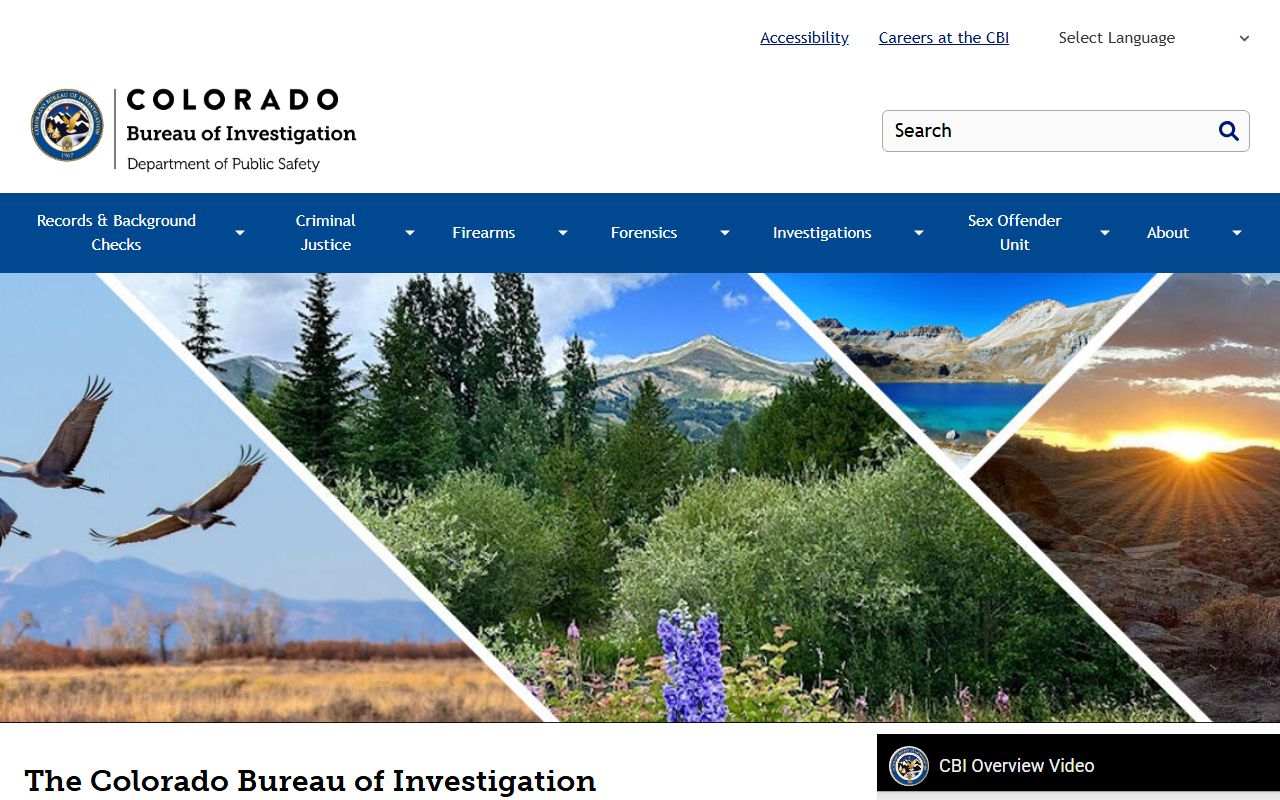
The State Patrol homepage provides access to records and agency information for Colorado residents.
Note: Records may be held by different agencies based on where the incident occurred.
How to Request Police Records in Colorado
Requesting Colorado police records starts with identifying the right agency. State Patrol records go through their Central Records Unit. Their online portal accepts requests for crash reports, case files, and digital media. You will need the case number, date, and location of the incident. The system processes online requests the next business day. Most records release within ten business days after payment.
The State Patrol Records Portal offers several request types. Basic crash reports cost five dollars for ten pages or fewer. Each additional page costs twenty-five cents. Case files and photographs require separate requests. Digital media like body camera footage has its own request form. Mail requests need a self-addressed stamped envelope with payment.
The portal page shows all available request options for Colorado police records.
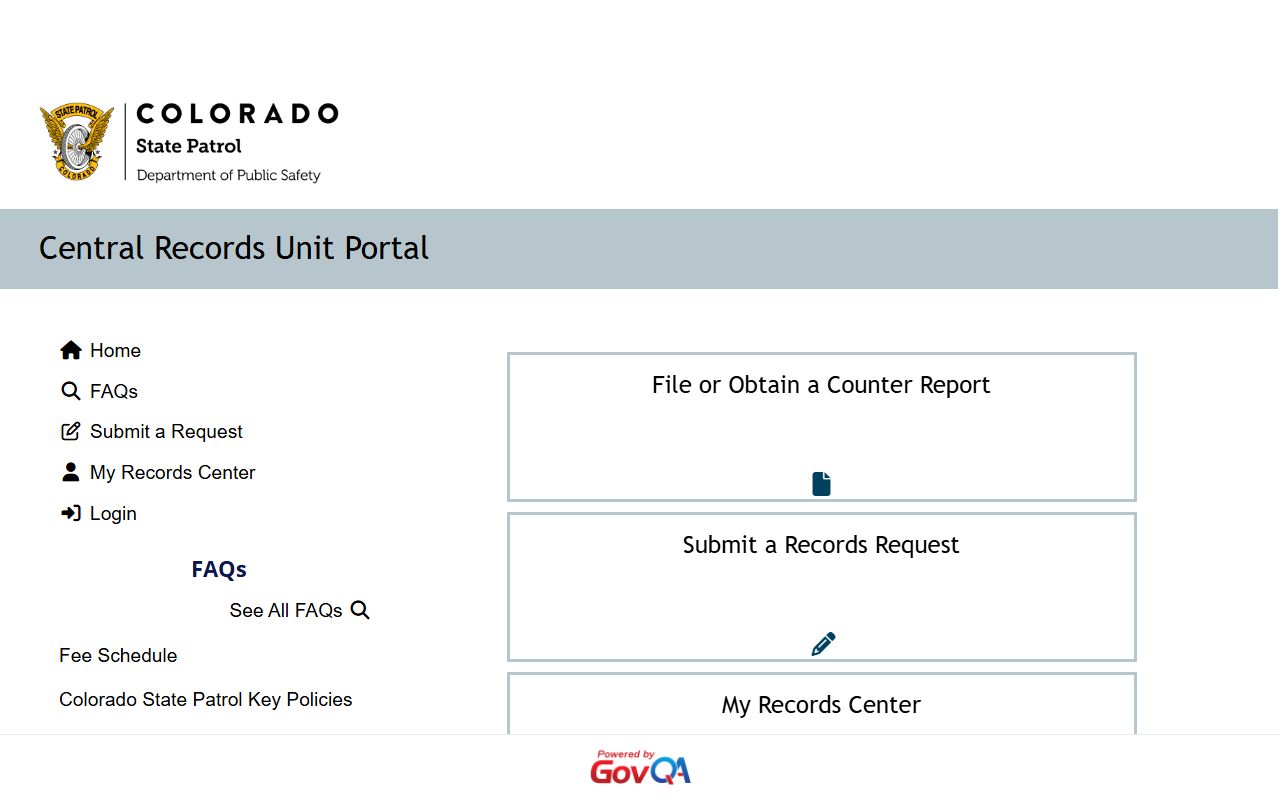
Users can select the type of records they need through this online system.
For criminal history checks, use the CBI Internet Criminal History Check portal. This system provides instant name-based searches. Results download immediately after payment. Each search costs five dollars when paid by credit card. Mail requests cost thirteen dollars and take about three days plus mailing time. The CBI portal only shows Colorado records based on fingerprint submissions.
Types of Police Records Available
Colorado law enforcement agencies maintain several types of records. Crash reports document vehicle accidents on state highways and local roads. These reports include driver information, vehicle details, and crash diagrams. Incident reports cover calls for service and police responses. Arrest records show bookings and charges filed. Criminal history records contain fingerprint-based arrest and conviction information.
The Colorado State Patrol Crash Information page explains how to obtain accident reports. Troopers respond to over eleven thousand crashes each winter. Reports include facts about the crash scene and parties involved. Witness statements and photos are not included in basic reports. Those items require separate requests with additional fees.
Crash information pages help drivers understand the reporting process.
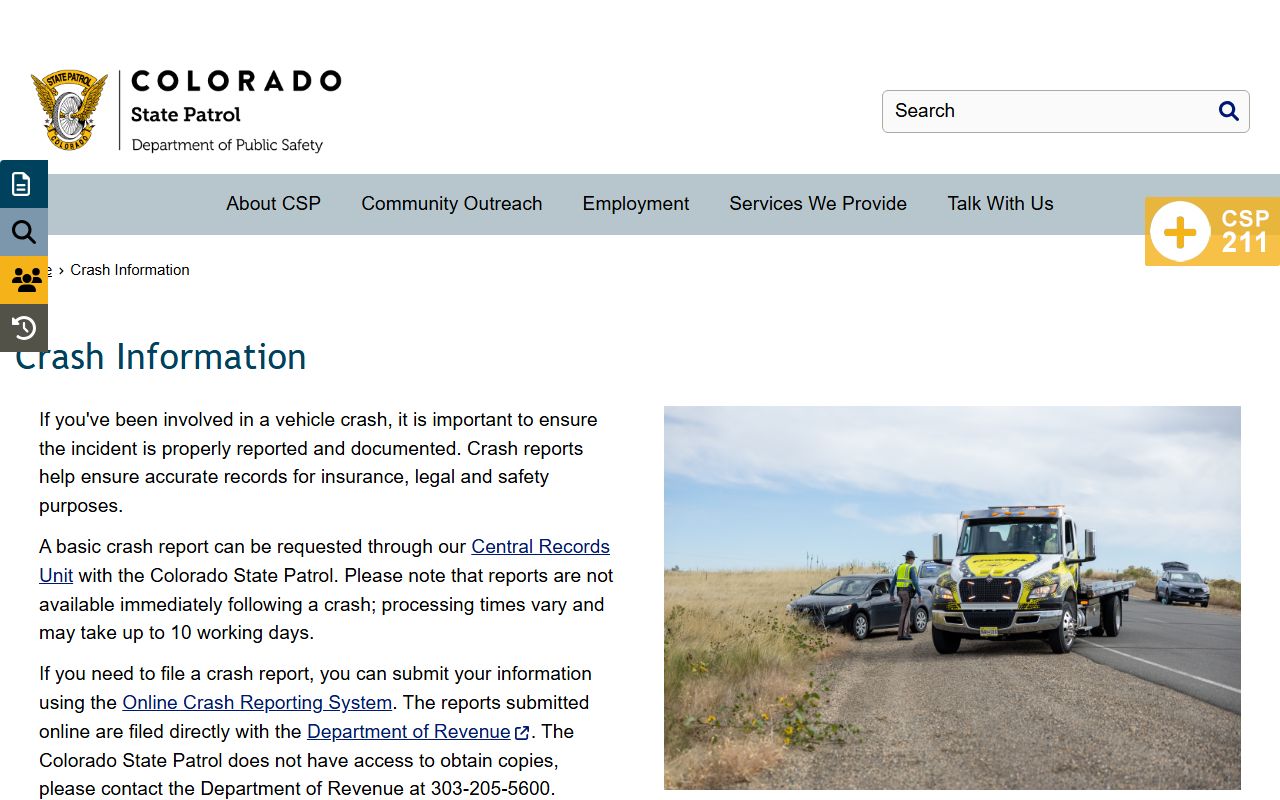
The State Patrol provides detailed crash reporting guidance online.
Criminal history records through CBI include arrests supported by fingerprints. They do not include juvenile arrests except when adjudicated as adult. Traffic arrests under age sixteen are excluded. Sealed records and out-of-state arrests do not appear. Warrant information is not part of criminal history reports. These limits help protect privacy while providing public access.
Note: Basic crash reports contain only the essential facts, not full investigation files.
Colorado State Patrol Records
The Colorado State Patrol serves as the state highway patrol agency. Troopers provide modern policing services across Colorado. Their core mission protects life, peace, and property. The agency responds to crashes, enforces traffic laws, and assists motorists. State Patrol records focus on highway incidents and traffic enforcement.
The Central Records Unit handles all public records requests. They process requests for crash reports, case files, and citations. The unit also manages requests for body camera footage and audio recordings. Their GovQA portal makes online submission easy. Most requests process within ten business days.
The Records Unit page provides contact information and request instructions.
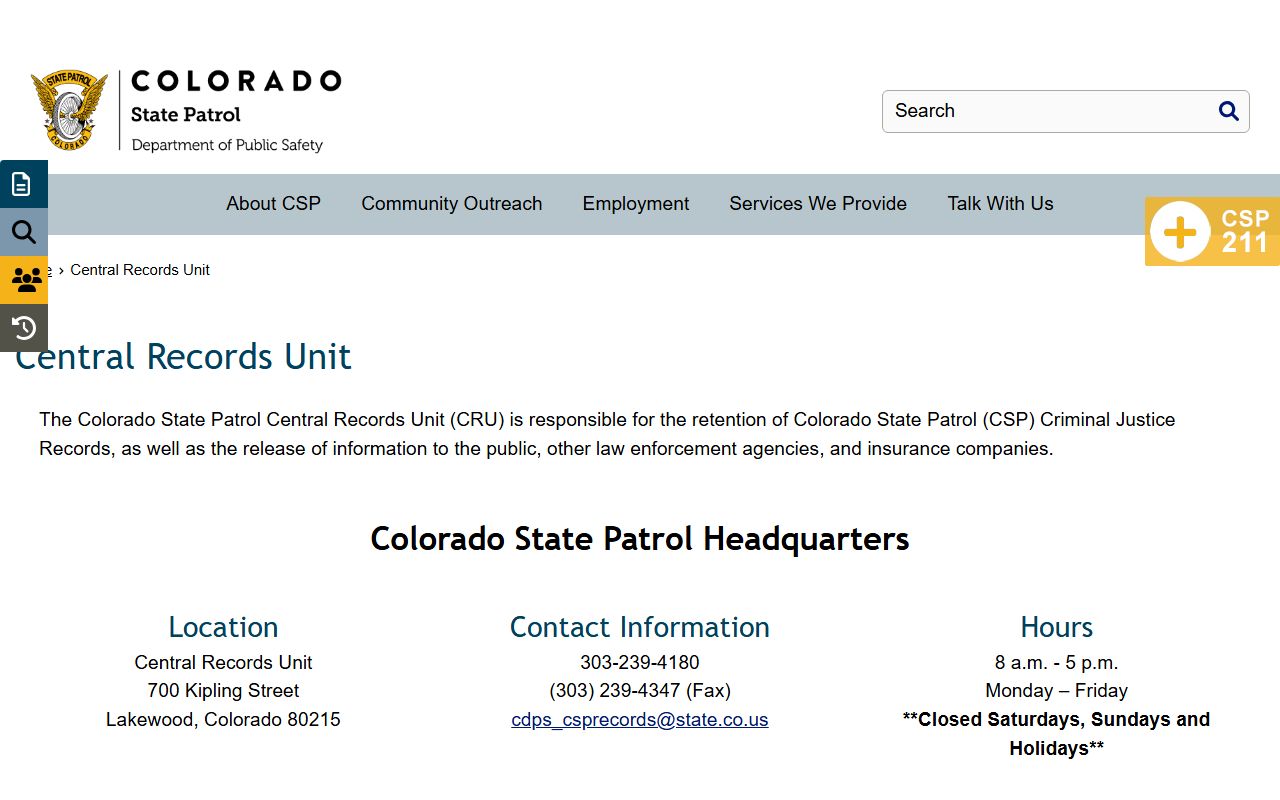
The Central Records Unit processes all State Patrol record requests.
During severe weather, troopers may issue Accident Alerts. This happens when high crash volume overwhelms resources. Drivers in minor accidents may need to file reports themselves. The Colorado Online Crash Reporting System accepts these self-filed reports. This system goes to the Department of Revenue, not the State Patrol. Always check if a trooper responded before requesting a report.
The Services page lists everything the State Patrol offers. This includes records, permits, and safety programs.
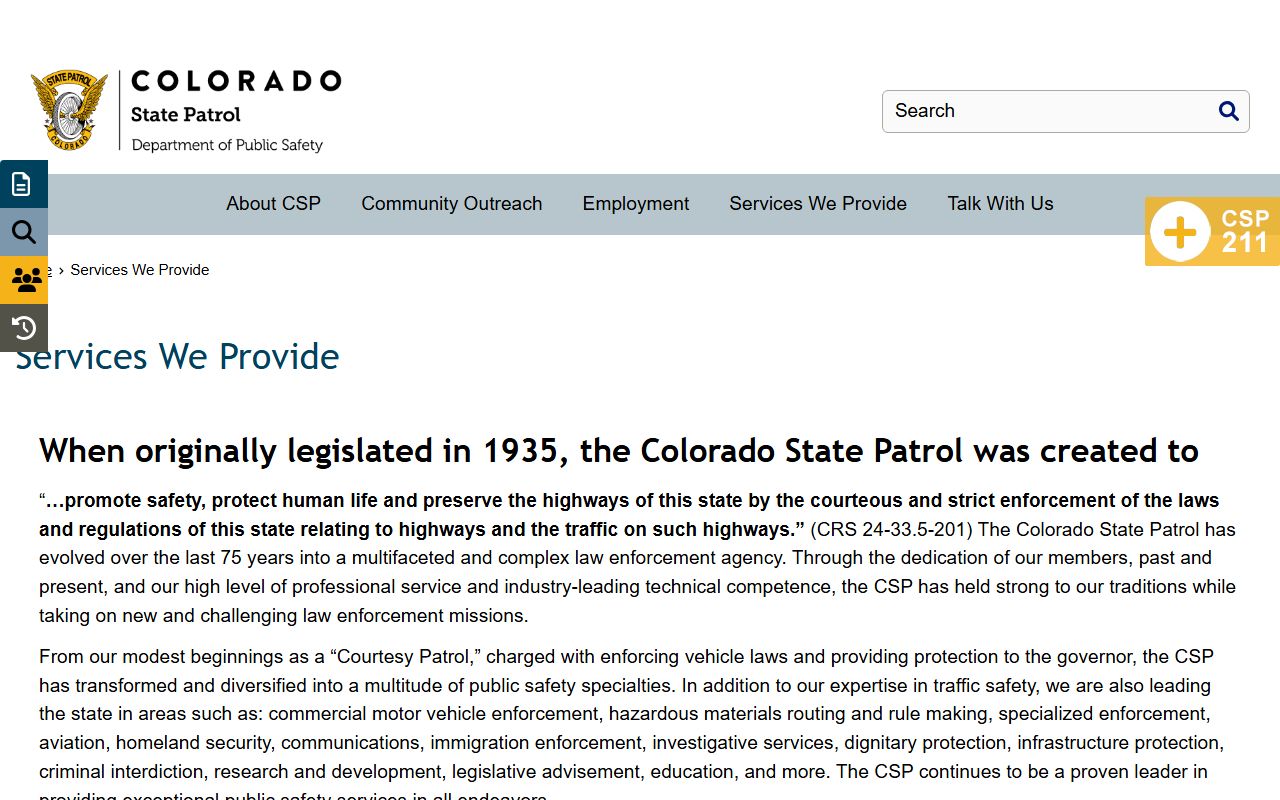
The services page outlines how to access various State Patrol resources.
Colorado Bureau of Investigation Records
The Colorado Bureau of Investigation began in 1967. The agency provides investigative and forensic services statewide. Over three hundred thirty members support local law enforcement. They assist with homicides, cyber crimes, and human trafficking cases. The CBI operates primarily as a by-request agency for complex investigations.
The Records and Background Checks unit manages criminal history data. Their Biometric Identification and Records Unit maintains fingerprint records. The Multimodal Biometric Identification System identifies prints. Colorado Crime Information Center stores all fingerprint-based criminal history. These systems help law enforcement solve cases across Colorado.
The records page explains how to access criminal history information.
CBI provides multiple ways to obtain criminal history records.
The Internet Criminal History Check allows instant name-based searches. This system gives immediate results for Colorado-only records. Users pay per search with credit or debit cards. Results download as PDF files. This cannot be used for requests requiring notarized documents.
The ICHC portal provides quick access to criminal history records.
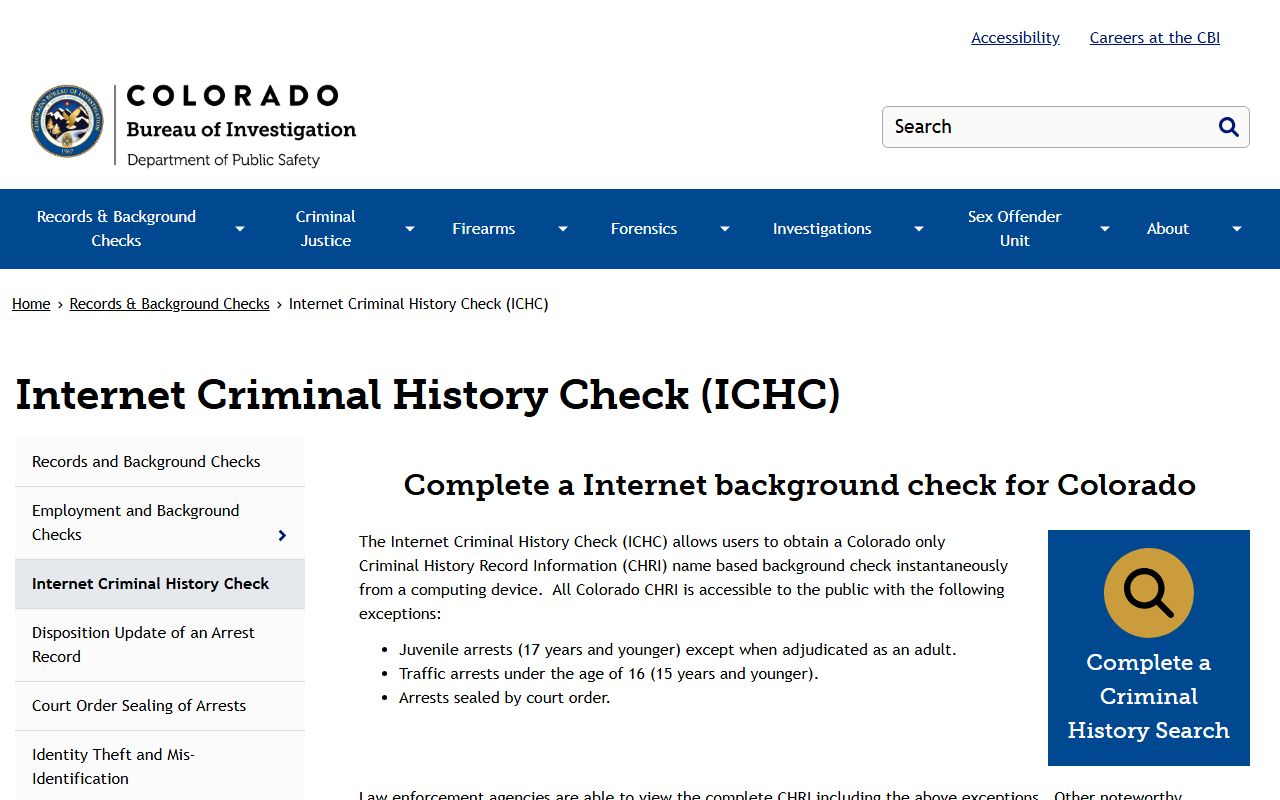
Users can search criminal history records instantly through this portal.
The CBI Records Check Portal is the online entry point. The system searches Colorado Criminal History Record Information. All Colorado arrests appear except sealed or juvenile records. Traffic arrests under age sixteen are excluded. Each search incurs a separate fee. Results are available immediately after payment processing.
The online portal enables instant criminal history searches.
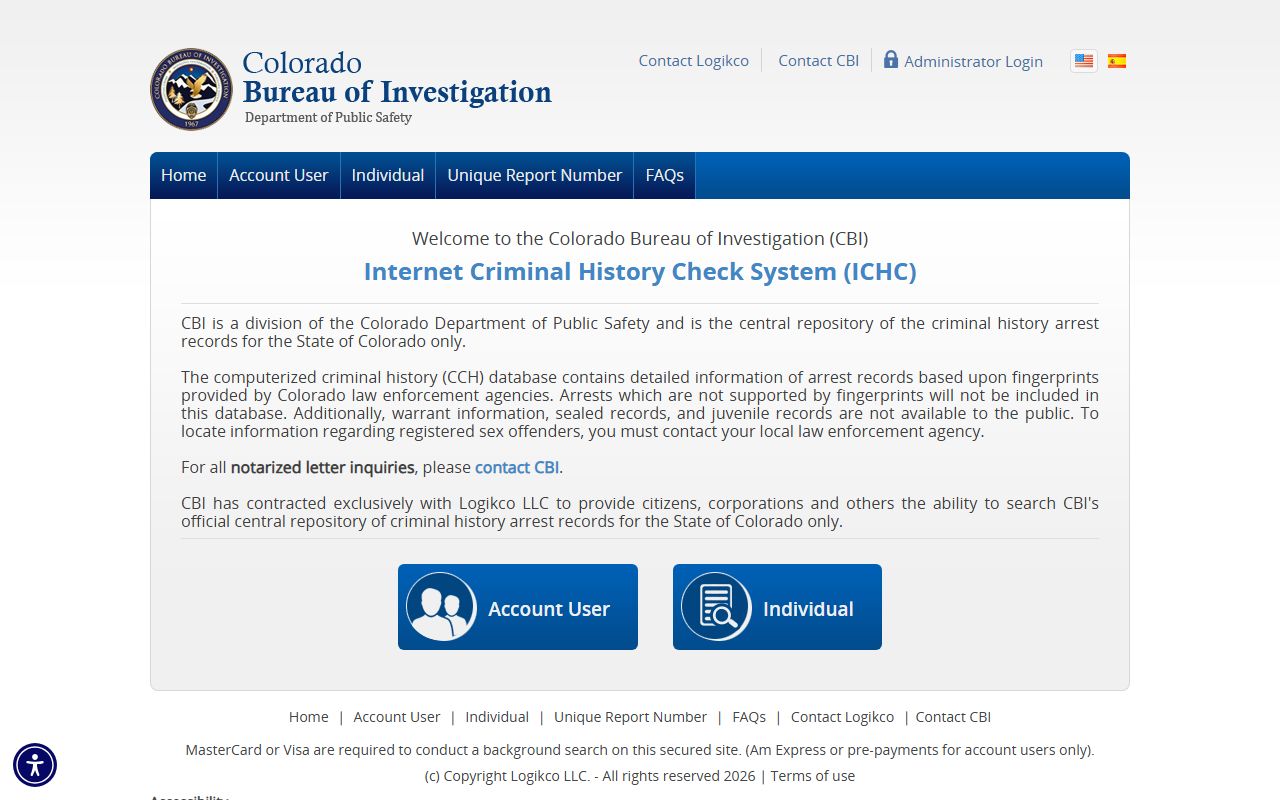
This portal allows users to obtain criminal history records online.
Understanding CORA and CCJRA Access Laws
Colorado has two main laws governing records access. The Colorado Open Records Act covers most public records. C.R.S. § 24-72-201 through 206 establishes the right to inspect and copy records. CORA applies to state and local government agencies. It requires responses within three working days. Agencies may extend to ten days with written explanation.
The Colorado Criminal Justice Records Act governs police records. C.R.S. § 24-72-301 through 309 applies to law enforcement agencies. This includes police departments, sheriff offices, and the CBI. The law balances public access with investigative needs. Some records may be withheld during active investigations. Other records have restricted access to protect privacy.
The CBI CCJRA Information page explains public records procedures. The first two hours of research and retrieval are free. Agencies may charge twenty-nine fifty per hour beyond that. Fees vary by agency. Some records require proof of identity for release.
The CCJRA information page details how to request criminal justice records.
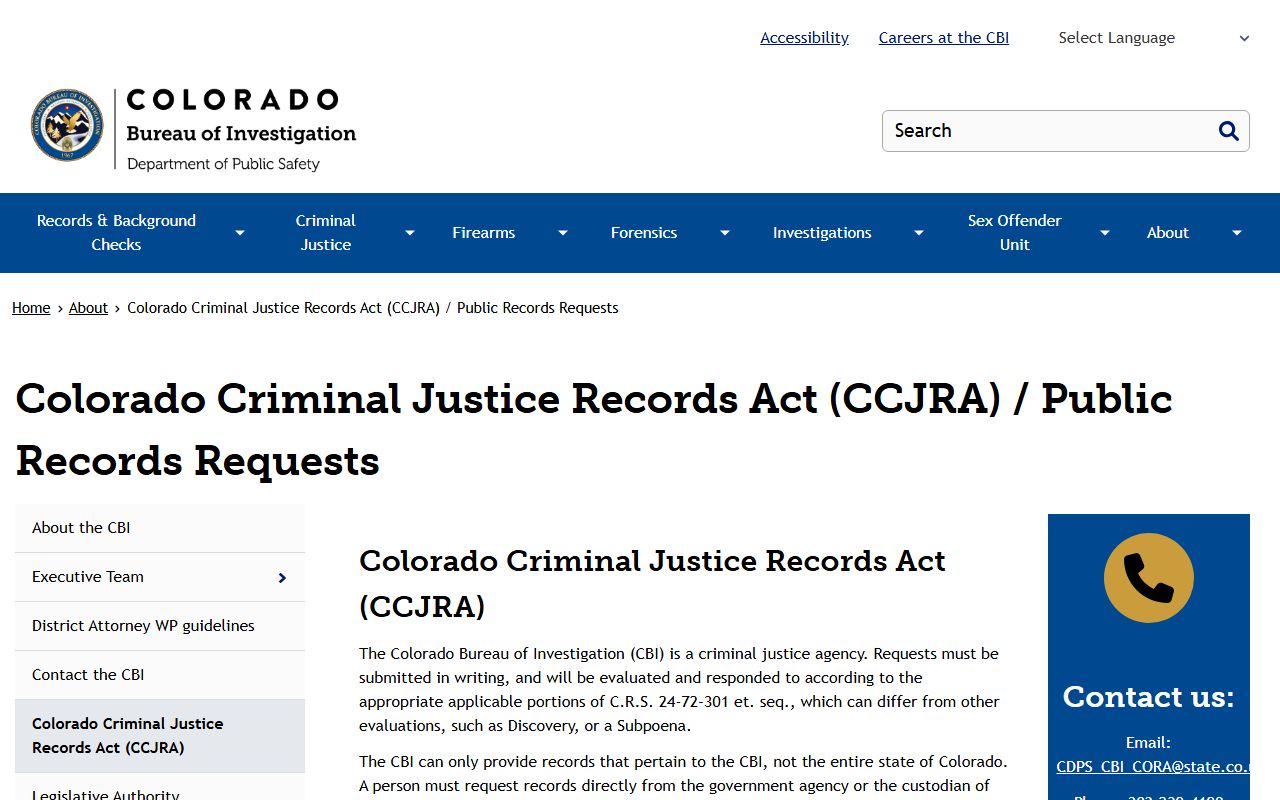
CBI provides guidance on the Colorado Criminal Justice Records Act.
C.R.S. § 24-72-305.5 prohibits using records for pecuniary gain. This means you cannot use police records to solicit business. The law protects individuals from commercial exploitation. Violations may result in penalties. Always use records for legitimate purposes only.
Learn more at the Secretary of State CORA page or the Colorado Freedom of Information Coalition.
Fees and Processing Times for Colorado Police Records
Colorado police records have different costs depending on the agency and record type. State Patrol basic crash reports cost five dollars. This covers ten pages or fewer. Each extra page adds twenty-five cents. Case files and photographs cost more. Digital media requests have separate fees. Payment is required before records release.
CBI criminal history checks cost five dollars online. Credit or debit cards are accepted. Mail requests cost thirteen dollars. Money orders or cashier checks are required for mail. Each search result incurs a separate fee. Rush processing is not available for mail requests.
Processing times vary by request method. Online State Patrol requests process the next business day. Most records release within ten business days. Mail requests take longer depending on postal times. CBI online checks are immediate. Mail requests to CBI take about three days plus mailing time.
Note: Include a self-addressed stamped envelope when mailing requests to speed processing.
Tips for Requesting Colorado Police Records
Getting Colorado police records is easier with proper preparation. First, identify which agency holds the records you need. State Patrol handles highway incidents. Local police handle city incidents. Sheriff offices handle county areas. CBI handles criminal history only. Contact the right agency to save time.
Gather key information before submitting your request. You will need the case number if available. Include the date and location of the incident. Provide names of involved parties. The more details you include, the faster the search goes. Vague requests may be delayed or denied.
Use online portals when available. The State Patrol GovQA system accepts electronic requests. The CBI ICHC portal provides instant criminal history results. Online requests often process faster than mail. They also provide confirmation of submission. Keep your confirmation number for follow-up.
Remember these key points when requesting records:
- Include all known details about the incident
- Use online portals for faster processing
- Allow ten business days for most requests
- Include proper payment with mail requests
- Attach a self-addressed stamped envelope for mail
- Follow up if you do not hear back within the expected time
Be aware of Accident Alerts during bad weather. Troopers may not respond to minor crashes. You may need to file your own report. Check the State Patrol website for current alert status. This affects whether a report exists in their system.
Browse Colorado Police Records by County
Each of Colorado's 64 counties has a sheriff's office that maintains police records. Select a county below to find local contact information and resources.
Police Records in Major Colorado Cities
Major cities in Colorado have their own police departments that maintain incident reports and arrest records. Select a city below to learn about accessing records in that area.